
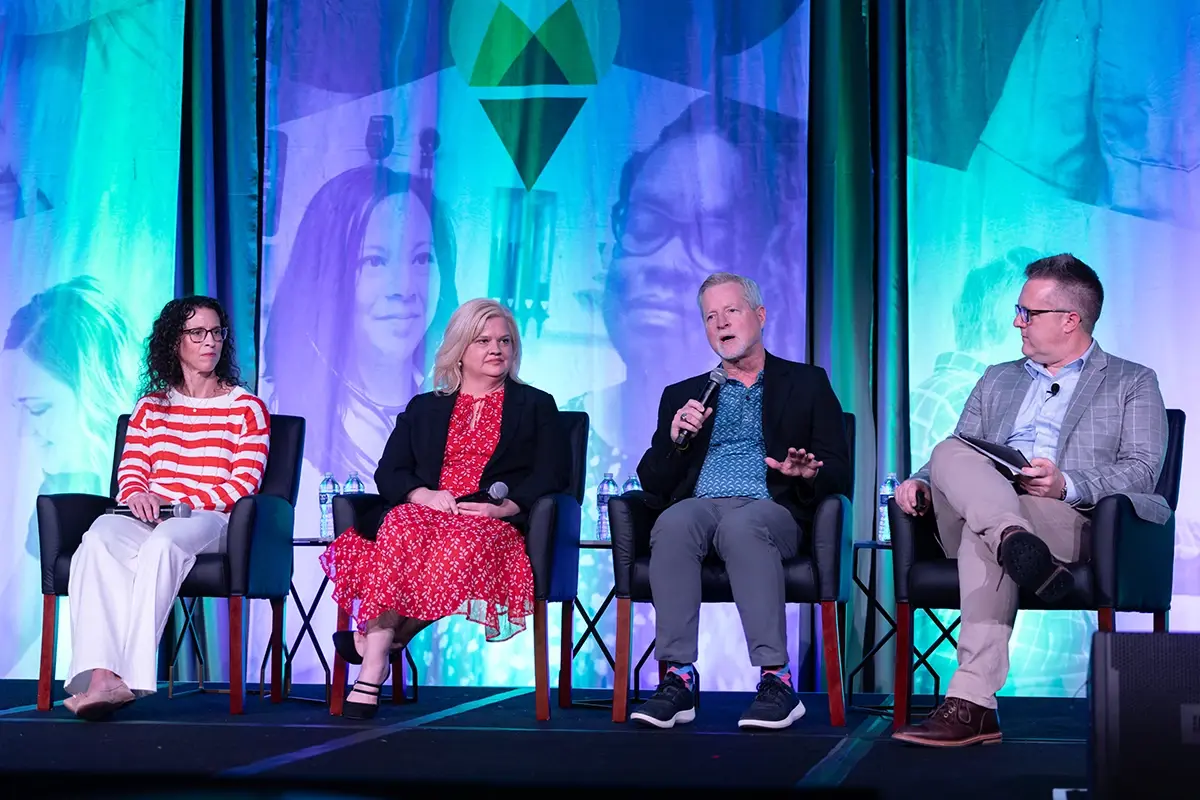
At ENGAGE 2025, Marathon Health brought together a panel of experienced employer leaders to explore how reconnecting to an organization’s core purpose can drive measurable health and business results.
The conversation featured insights from:
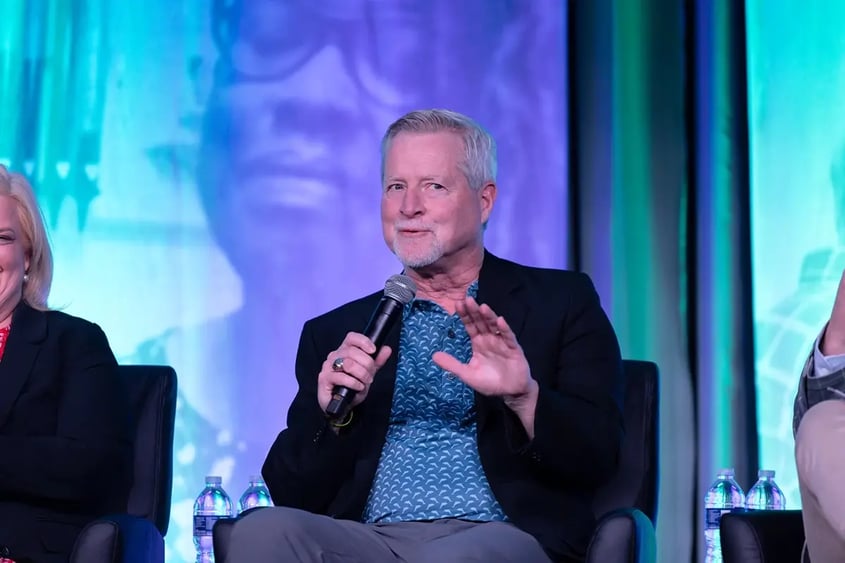
- Gary Williams, Executive Vice President, Mount Vernon Mills
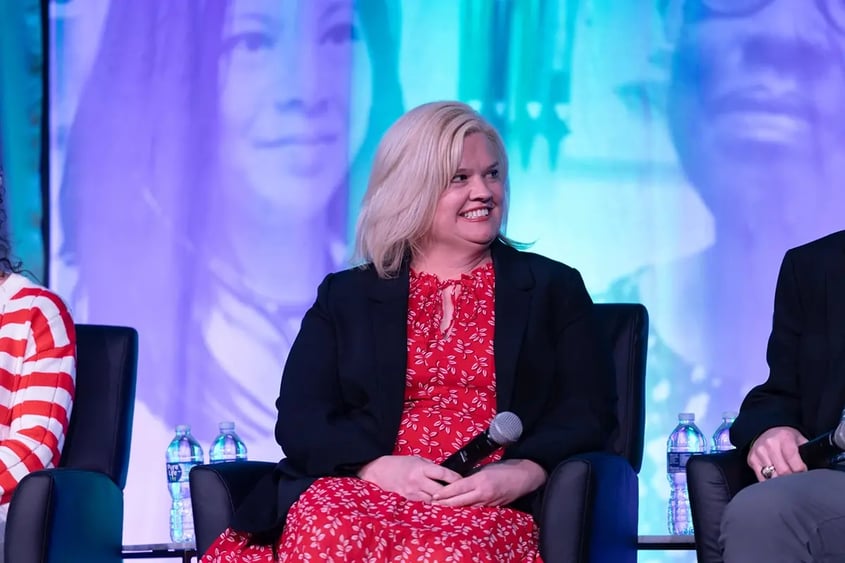
- Tricia Griggs, Health and Wellness Manager, formerly Aflac
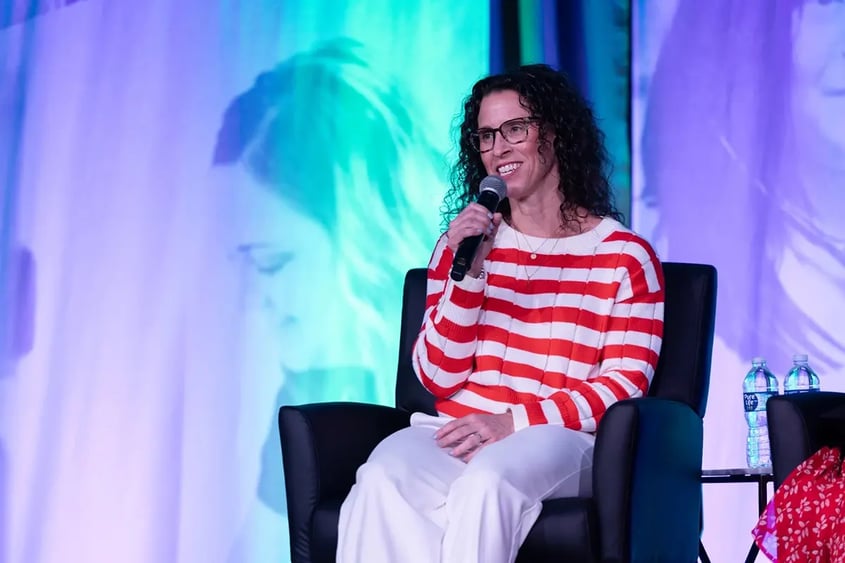
- Jana Goolsby, Wellness Program Manager, City of Olathe, Kansas
Together, they shared how grounding their strategy in a clear “why” helped them achieve meaningful outcomes and offered practical guidance for employers looking to do the same.
The “why” for investing in employer-sponsored health care
Williams described how Mount Vernon Mills watched its health care costs spiral out of control in 2003. A third-party broker consultant first suggested the idea of opening an onsite health center, which set the company on a new path.
“Our CFO and I just said, ‘We've got to do something,’” Williams said. “Our health care costs were running rampant. We said, ‘Even if it's wrong, we've got to try something.’”
The organization opened its first health center at its largest facility in Trion, Georgia, and, after seeing strong results, expanded the model by building additional centers across its other locations.
“Our cost through the years is so far below the national average, it's hard for people to believe,” Williams said. “But it has worked, and it has worked beyond that, because now it’s the best benefit. Every employee and every manager will tell you it's the best benefit we have.”
Griggs explained how Aflac already had a clinic run by a local hospital, but she said it was very reactive and employees mostly visited for acute issues. She said the organization sought a more proactive solution.
What makes Marathon Health stand out
“We went through the RFP, and we interviewed several companies. The thing that made Marathon Health stick out the most to me was one question,” Griggs said. “I said, ‘I come up with these crazy ideas every once in a while about things we should try. I know you have a workflow, but would you go along with some of my crazy?’ They were the only company that said, ‘Absolutely, we look forward to your crazy ideas.’”
The organization also wanted to create a benefit employees actually use and value.
“We’re proud to say our clinics are a true benefit to the employees,” Griggs said. “They don't pay anything for any of the services they get there.”
Before joining the City of Olathe, Goolsby worked for a physical therapy provider whose mission was to transform care delivery and ensure every patient received the best care possible. The organization prioritized spending more time with each patient rather than pushing providers to see as many people as possible.
“When I listened to Marathon Health give that pitch, and I heard Jeff [Wells, Marathon Health CEO] say it again this afternoon about giving the best health care that our patients deserve, that matched my mission personally as a health care provider, and I wanted to have our employees experience that themselves,” Goolsby said.
Goolsby said the City of Olathe is nationally recognized for their innovation, and they wanted to be one of the first municipalities to open an employee health center.
“Our mission at the city is to treat our customers like friends, family members, and neighbors, so our city council and our city manager believes that we should treat our employees the same way.”
Since opening its health center, the city has realized significant savings and avoided raising employee premiums for several years, Goolsby said.
“They pay nothing to use the health center, and they also get to go on work time,” Goolsby said. “So, it’s really a benefit to our employees to help them be their best self.”
Key learnings from adopting advanced primary care
Williams said some employees were initially skeptical of the health center. Specific programs they designed to address smoking and diabetes management made workers question their true intentions. Williams said promoting the advanced primary care benefit from the top down proved most effective for easing concerns and driving engagement.
“Getting your managers on board and having them go, having your CEO, your C-suite go to the clinic and talk favorably about them goes a long way,” he said.
Goolsby explained how she was able to expand health services by looking beyond the clinic's own walls and partnering with others in the community. What began as a simple conversation with a local school district and a neighboring city quickly grew into a meaningful collaboration, one that strengthened the clinic’s reach and the support it could offer.
“Between that collaboration, we were able to add mental health services for our clinic,” Goolsby said. “I got emails that said, ‘This is the best resource we've ever had. We need more.’
“We went from starting out with two days of mental health services to now we have four days of mental health services onsite. We continue to look at our claims, and we've seen the savings our health center provides and the resources it gives our employees.”
Griggs talked about how Aflac initially opened three worksite health centers, but quickly realized they were excluding a large block of employees who work remotely across the country.
“We have a footprint pretty much in every state, so we added CareAnywhere [Marathon’s virtual primary care solution]. Everyone who has used it has been amazed that you can actually do a primary care appointment virtually, you can have your lab work done, and they can help you monitor your blood pressure, your diabetes—the whole nine yards,” Griggs said. “We're very excited to see where that's going to lead us.”
Best practices for working with a health center partner
Stafford asked the panelists to share some best practices and takeaways for offering employer-sponsored advanced primary care.
“So, some things that I've learned along the way, especially with our relationship with Marathon, is the value of communication and building that relationship,” Goolsby said.
She stressed the importance of building a relationship with your health center provider and ensuring open, two-way dialogue.
“Marathon has been there all along the way. They have encouraged us. They've supported us with our trials and tribulations,” Goolsby said. “When we didn't like something they were doing, they were okay with me telling them, ‘I don't like that.’”
Echoing Goolsby's point, Griggs said employers shouldn’t feel afraid to speak their minds and to ask whenever a need arrives.
“Don't be afraid to ask. Marathon knew from the get-go I was going to come up with some crazy ideas and some crazy asks,” Griggs said. “They’ve been very good with that and been able to take my craziness and tone it down to something more realistic.”
Williams said employers need to communicate benefits information regularly. Looking back, he said he wished he reached out to spouses earlier. Not only can they encourage their partners to seek care, they’re also part of the company’s health plan and can utilize the same services as employees.
“Circular communication has to happen. You have to communicate with your employees, as well as managers and your C-suite,” he said.
Williams said it’s also critical for employers to maintain regular communication with their vendor’s client success manager.
“We're set up every Tuesday to talk, and I think it's important because if you don't do that, sometimes it gets three and four weeks down the road, and suddenly something has slipped further than you wanted it to. So, communicate, communicate, communicate,” he said.
Nigel’s story
To close out the session, Griggs shared a patient testimonial from an Aflac employee named Nigel who discovered he had prostate cancer after his annual wellness visit, despite showing no symptoms.
“Because I'd had early detection, my cancer had not spread to anywhere else,” he said. “If it had spread anywhere else because it had gone undetected, I would’ve had to have chemotherapy or radiation.
“Early detection is the key part of taking control of our health. We often cannot feel the symptoms of cancer. We cannot feel the symptoms of high blood pressure. We cannot feel the symptoms of high cholesterol. We have to be proactive as early detection is needed for these diagnoses,” he added.
Looking ahead
To relive ENGAGE 2025, check out this video playlist. And ask your Marathon partner about ENGAGE 2026 at the Broadmoor in Colorado Springs, Colorado next year—February 25-27. We can't wait to see you there!
By working collaboratively, we can create a healthcare experience that delivers better outcomes, greater satisfaction, and lasting impact for all.
About Grand Strides
Marathon Health’s Grand Strides series brings our clinical community together for candid conversations with trailblazers in healthcare. These sessions are designed to spark new thinking, share actionable insights, and inspire our teams as we navigate the evolving landscape of care. Looking for more healthcare optimism? Read the recap from Grand Strides with Dr. Amy Abernethy.