
Across the country, business and government leaders are rethinking what it takes to make health care more accessible and effective. Marathon Health recently convened a series of roundtable discussions to explore how employers, health care providers, and policymakers can partner to expand access to primary care.
Much of the conversation focused on one of today’s greatest challenges: meeting the growing demand for mental health support. Participants also discussed the ways technology can help bridge care gaps and how integrating mental and physical health within primary care creates a stronger foundation for whole-person well-being.
From Columbus, Ohio, to Richmond, Virginia, and Charlotte, North Carolina, learn how innovative leaders are making a difference in their communities and workplaces.
Tackling the social determinants of health in Richmond with a “people-to-pipette” model
In Richmond, Virginia, leaders across health care, business, and public service came together to discuss how to strengthen mental and physical health for employees and families.
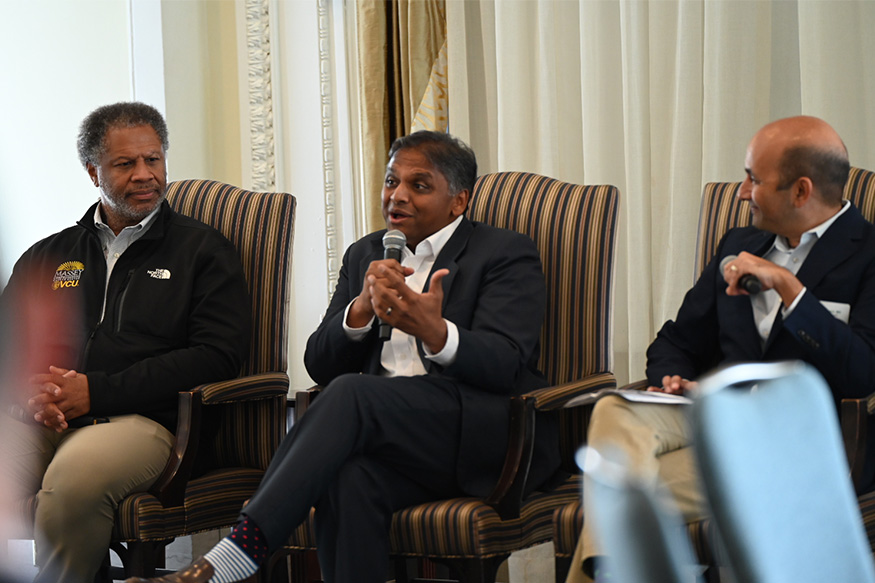
The speaker session featured Danny Avula, MD, Mayor of the City of Richmond and Robert Winn, MD Director and Lipman Chair, VCU Massey Cancer Center. Mayor Avula is the 81st Mayor, pediatrician and public health professional. Dr. Wynn is an accomplished oncologist and researcher in cancer outcomes. These two physicians have taken the knowledge and experience of treating one patient at a time and applied it to improving societal outcomes.
As the Mayor progressed in his career, he learned to think more holistically about whole health and population health—that an individual’s health includes physical, mental, and spiritual well-being. At a community or population level, that includes the context people are living in such as the environment, the opportunities available to them, and the conditions that influence them.
He noted that while about 20% of population-level outcomes relate to healthcare quality, a much larger percentage relates to social determinants of health such as diet, housing, stability, and income. He said, “I increasingly looked at these social drivers and recognized that to truly improve outcomes you have to be invested in safe, stable, affordable housing, and workforce opportunities.”
Dr. Wynn then shifted gears to introduce a clinical use case. Although most people still think of cancer as an elderly disease, since 2020, the fastest-growing groups of people diagnosed with cancer, spiking in breast and colorectal, are young (19-39) and middle-aged (40-49) adults.
He shared, “The tsunami is tied not just to the science but to the application of that science; the science of health delivery and how it reaches our communities. That’s why some of my heroes are in this room.” He noted, “Legislators, health systems, public health—all coming together.”
Dr. Wynn talked about a “people-to-pipette” model. He continued, “We’re missing the lived experiences of people.” In Virginia, he’s working to align scientific questions and data with real community needs. Not just solving a problem for a person—but for a population. He says, “This community-to-bench model is starting to take shape around the country because it matters.”
Strengthening mental and physical health for employees and families
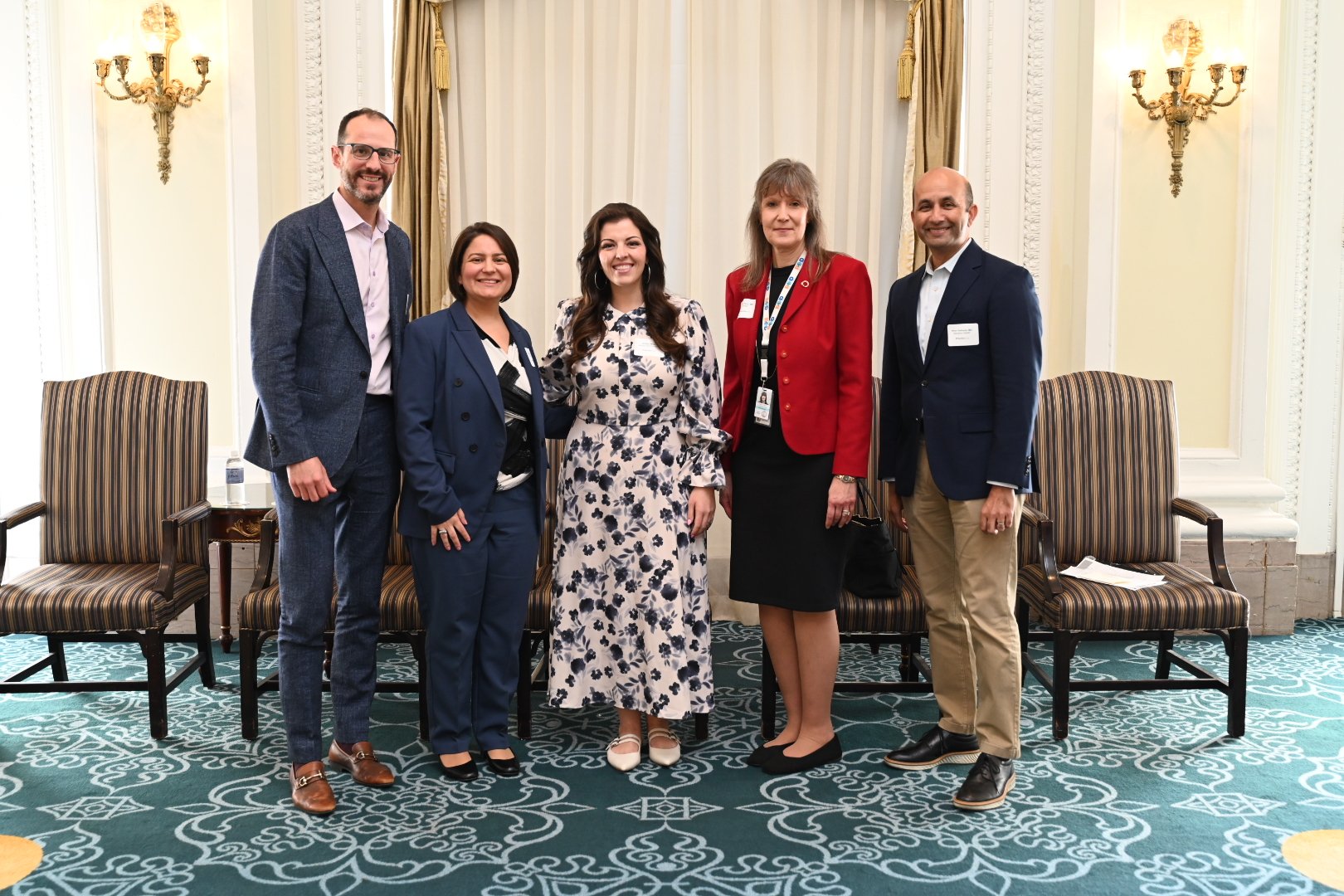
The follow-on discussion featured Nirav Vakharia, MD, Chief Operating Officer at Marathon Health, Jeff Wells, MD, CEO of Marathon Health, Elaine Perry, MD, Director of the Richmond and Henrico County Health Districts, Jesalyn Moore, Licensed Clinical Social Worker (LCSW), Police Wellness Manager at James City County Police Department, and Paulette Giambalvo, Master of Public Health (MPH), Human Resources Division Chief for Benefits and Wellness at the City of Richmond.
Dr. Vakharia began the conversation by asking Giambalvo how the city approaches mental health for more than 4,500 employees and their families.
Giambalvo emphasized the importance of truly understanding the needs of a diverse workforce. She explained employees face different challenges depending on their stage of life, whether they’re just starting their careers or juggling work and caregiving responsibilities. By identifying those unique needs first, employers can design services that genuinely support their people and ensure those services reach the employees who need them most.
Just as importantly, she says employers need to communicate mental health benefits to employees in ways that resonate, even if it means going old school.
“We've gone back to home mailers,” Giambalvo says. “We actually sent out a home mailer recently where it had every single virtual behavioral health service that was available to our employees, and which ones were available through EAP, and which ones were available through their health insurance.”
Giambalvo explains that through Marathon Health, the city offers employees easy access to a behavioral health provider, an option many staff members use and value. The city is also bringing on a dedicated mental health provider for police and fire personnel to address their unique needs.
She says police officers on average face over 200 critical incidents during their career. This chronic stress puts them at a much higher risk for PTSD and suicide.
Moore adds that many in law enforcement are skeptical of EAP programs and other mental health benefits. Her unique role in the James City County Police Department allows her to build trust and introduce mental health resources in a non-threatening way.
“Being embedded within the department is really meaningful, because it allows me to make those relationships,” she says. “I throw a vest on, and I sit in a car for 12 hours sometimes and that's when they start talking about things, because it's normalized. I'm able to literally sit beside them in a space where they feel empowered and safe.
“I also brew a lot of coffee, and I cuss a little bit, so that's been really effective in breaking that stigma down,” she adds.
Mental health connects to physical health
Wells says employers are already investing in mental health, whether they realize it or not.
“You cannot disentangle physical health from mental health, and the misunderstanding of that fact, I think, actually leads to sub-optimal outcomes,” he says. “The World Health Organization has reported that 70% of all primary care visits globally have some type of mental health issue. Depending on the literature you read, anywhere from 20% to 30% of all emergency room visits have an underlying or coexisting mental health issue.”
Wells explains that many patients experience symptoms like chronic headaches, dizziness, abdominal pain, or chest discomfort that prompt extensive testing and specialist referrals, but no clear diagnosis. Often, with more time and the right questions, providers can uncover underlying mental health concerns that are actually driving those symptoms.
“I think that’s the headline. This is about the system design if we want to solve it,” he says. “You have to meet people where they are. So, when I have a need, make addressing that need as easy and frictionless as possible. Give me the time and the space as a professional to work with an individual to discover what's going on and help guide me to the right outcome."
“And the challenge is our current health care system, for the most part, is not at all designed to address those fundamental factors—access is very difficult,” he adds “Often, you're waiting weeks or months to get the help you need. By then, something worse has happened. You're in a crisis or you've moved on, and then furthermore the whole system is sort of rewarded in a transactional model of quick encounters.”
Technology plays a role, but it’s not for everyone
AI is becoming increasingly popular for mental health support, but Moore cautions employees to use it wisely. She explains if people already distrust the health care system, adding technology can deepen those concerns.
“I think when you're talking specifically about a safety-sensitive population, you know, who have federal prohibitions around whether or not they can actually do their job and carry a gun and a badge. I think AI has a place, maybe as it relates to note-taking, but I'm not sure it has a place as it relates to their direct care, personally,” she says.
In these situations, Wells explains that integrating mental health services into primary care can help normalize and destigmatize seeking support. He says primary care physicians can make a warm handoff to a mental health counselor, so the process feels like a natural and comfortable part of the care experience.
“That's another way to make it very low friction and normalized for someone to just be like, ‘Oh, this is just as normal as following up on my blood sugar test or diabetes management.’”
Looking for a deeper dive? Watch the complete on-demand recording of the Mayor and panelists.

About Grand Strides
Marathon Health’s Grand Strides series brings our clinical community together for candid conversations with trailblazers in healthcare. These sessions are designed to spark new thinking, share actionable insights, and inspire our teams as we navigate the evolving landscape of care. Looking for more healthcare optimism? Read the recap from Grand Strides with Dr. Amy Abernethy.