
Employee benefits leaders today must juggle a trifecta of challenges: rising healthcare costs, an over-reliance on high-cost settings like emergency departments and urgent care, and an alarming increase in chronic conditions among employees.
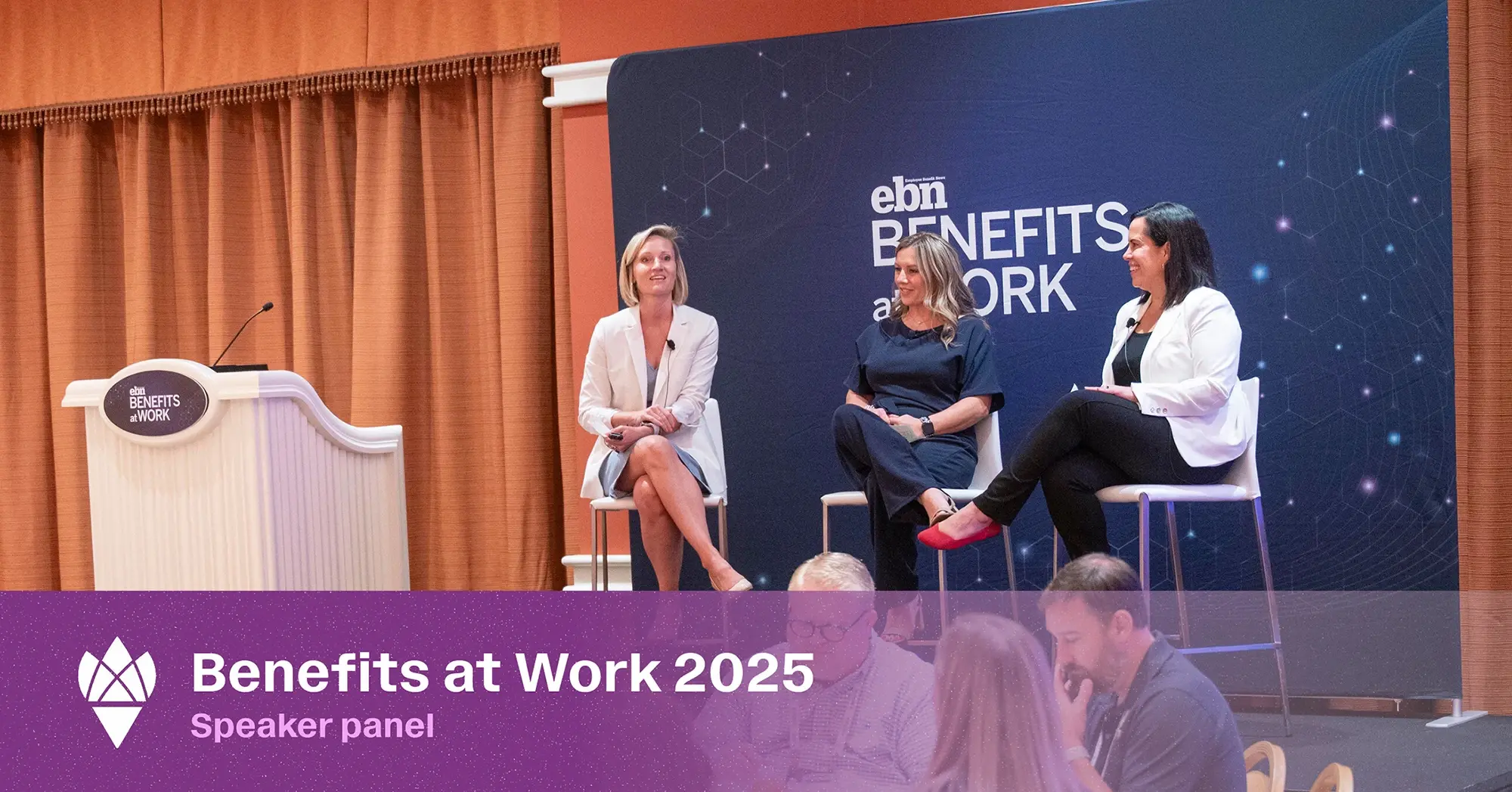
These realities were front and center at EBN’s Benefits at Work 2025 conference, where Krista Beckwith, vice president for population health and wellness at Marathon Health, led a panel discussion on how advanced primary care (APC) can serve as the first stop in improving access to preventive care and driving better outcomes.
“We have 250 branch locations, and a lot of our employees don't have access to care,” says Marie Yorn, a session panelist and director of total rewards with the Keystone Cooperative. “So, let alone the rising healthcare costs, what personally got me was hearing an employee say, ‘I don't have a primary care provider.’ That made me realize we've really got to take action on our preventive care for our employees.”
Additional barriers to access and engagement
Beyond rising costs of healthcare, employers face three major barriers to access and engagement.
- The traditional fee-for-service model rewards volume over value. Providers aren’t incentivized to focus on prevention or early detection of chronic conditions, leaving employees with rushed visits that treat symptoms, not the root cause.
- HR leaders are battling point-solution fatigue. Managing, administering, and communicating multiple programs drains resources and confuses employees, who often don’t know where to start.
- Employees must navigate a fragmented healthcare system. Primary care, mental health, physical therapy, and other specialists rarely coordinate, leaving care disconnected and employees unsupported.
When employers evaluate new benefits or point solutions, the conversation often centers on how to invest in a stronger health strategy. But too often, those investments don’t move the needle.
“If it's not a solution that increases access, lowers risk, improves health outcomes, or changes employee behavior—which is a big part of making all of this work—we're not actually investing, we’re just spending,” says Allison Velez, our chief people officer at Marathon Health.

Introducing advanced primary care
Advanced primary care reimagines what primary care should be and makes it the foundation of better health for every employee.
At its core, APC is all about improving access. Unlike traditional primary care, patients can see their provider as often as needed with little to no cost, enjoy same- or next-day appointments, and experience longer visits focused on building trust and understanding.
“If you think about that for a moment, a same-day appointment with your provider is almost unheard of in most spaces within the healthcare ecosystem today,” Velez says.
Providers take on population health risk and use a comprehensive, integrated approach to address up to 90% of a person’s healthcare needs. They have the time and flexibility to build genuine relationships with their patients. Over time, that trust drives meaningful change, encourages preventive care, and helps identify potential issues before they become serious.
These advantages led Keystone to partner with Marathon Health. According to Yorn, Marathon’s combination of network health centers and 24/7 virtual care solutions expand access for all employees, including those in rural areas.
She hopes the added convenience combined with a new incentive program boosts engagement with preventive screenings.
“We have an incentive-based program where if employees don't complete their wellness program initiatives this year, they're paying $50 extra per paycheck next year,” Yorn says.
Choosing an APC partner
When it comes to implementing APC, Velez says it starts with choosing the right partner.
“First, do you know there’s evidence and accountability in the partner, that they will deliver on the promises and meet the expectations that you have of them?,” Velez says. “They should feel as an extension of your benefits team and benefits strategy.”
Velez says APC providers must be transparent in how they deliver healthy outcomes and drive tangible ROI.
A recent study on the ROI of advanced primary care of Marathon Health clients and over 3 million claims found:
- 82% increase in primary care use
- 15% fewer ER visits
- 31% fewer urgent care visits
- 41% fewer inpatient admissions

“Where is that coming from? What's driving it? It's all coming through the trusted relationship and partnership between an APC provider and their patient,” Velez says. “One of the things I find pretty staggering is a 41% reduction in inpatient hospital admissions, which means that those providers are catching things early.”
Healthy outcomes from APC also translate to financial savings for the employer and employee.
“The more consistency you have and the higher the engagement, the bigger the payoff,” Velez says. “By year five, many of our clients are seeing—and we see this through the claims data—almost a 4x return on investment.”
Employees who actively engage with APC through Marathon Health save over $1,100 per year in claims, while members with a chronic condition save nearly $1,400 annually.
“The more that we make care work around the patient versus trying to make the patient figure out how to navigate their own care, we’ll become more successful overall in managing the cost curve in general,” Beckwith says.
Beyond the bottom line: Care that changes lives
One of the key takeaways from EBN Benefits at Work 2025 event is that adopting advanced primary care delivers measurable savings for employers, but the real impact goes far beyond the bottom line. It changes lives.
Too many employees delay care because of access and cost barriers, sometimes going years without a simple screening. That delay can allow dangerous conditions to go undetected.
In contrast, when employees have easy access to affordable care, they’re more likely to uncover potential issues early, sometimes even life-threatening ones.
To dive deeper: Check out the full panel discussion and audience Q&A: EBN Benefits at Work 2025: Expanding Preventive Care Access to Drive Better Outcomes. Watch now.
If you do one thing this quarter: Start with an internal audit—use NIOSH’s Worker WellBeing Questionnaire (WellBQ) to establish a baseline of culture, hazards, health access, and outcomes. Then pick three high-leverage changes (e.g., early MSK program, mental health navigation, ergonomics pipeline) to focus on.
Better together—the power of integrated care models
I’ve seen this transformation at many organizations, and it’s powerful—for both employees and the business. Among our clients that offer occupational health alongside advanced primary care, we see 15% higher employee engagement. At one leading manufacturer, we implemented a Total Worker Health approach and are seeing an impact on both their healthcare and injury-related costs.
In this example, the employer offers advanced primary care, occupational health, and physical therapy at an onsite health center. They’ve established an early reporting culture where proactive symptom intervention is commonplace. There isn’t any stigma for seeking care, in fact, it’s rewarded.
So, what happens when a distribution teammate reports early low-back soreness to the onsite provider? Within hours a clinician evaluates, applies OSHA first aid, adjusts the job setup, and coordinates a warm referral into primary care for weight care, sleep, and metabolic risk.
The result: no recordable, no DART, full duty within days, and (months later) improved A1C and sleep because the root issues were addressed, not just the symptoms.
These “save the claim” moments add up. Our clients have seen results like 40% fewer OSHA recordables, 47% lower DART, 40% lower average injury claim cost. Additionally, members who engaged with Marathon had 16% lower healthcare costs. At scale, integrated models like WorkSafe™ by Marathon Health drive organizational transformation.
Looking ahead
The future of work brings new challenges. With rapid advancements in technology, we’re moving beyond an era dominated by heavy, high-risk physical work into one that’s more sedentary and cognitively demanding—with psychosocial risks rising as fast as MSK. Ensuring the health, durability, and longevity of the workforce isn’t just good corporate citizenship, it’s the backbone of productivity and competitiveness. Total Worker Health and whole-person care improve quality of life and economic output—and an organization is nothing without its people.
Want to learn more? Download our whitepaper to see how advanced primary care sets the foundation for reduced injuries, improved recovery times, and strengthened workforce stability.
Consider a patient, diagnosed with a heart murmur in childhood and never treated again, who needed his DOT physical. What happens in a traditional, transactional model? Do the physical, check the box, send the patient on their way. Our Total Worker Health model gives providers—adept in both primary care and occupational health—the time and tools to understand patients’ unique needs. When this patient came to our health center, the provider noticed the murmur and escalated an immediate cardiology referral. It’s moments like these that illuminate the value of a whole-person care approach.