Employee benefits are among the largest line items on a company’s budget, and one of the most prominent among employees, boards, and CEOs. Yet in many organizations they are still treated as a cost to manage rather than a strategic lever.
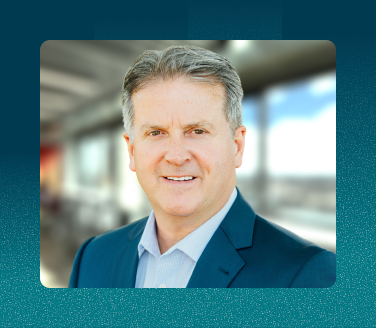
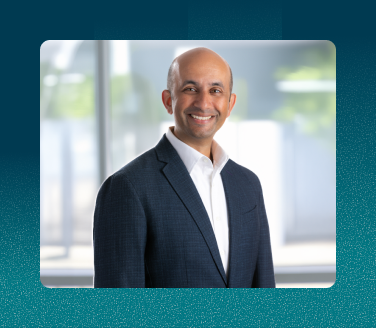
Shawn Jung, Marathon Health’s new chief financial officer (CFO), brings a finance leader’s perspective to the question, along with energy, curiosity, and enthusiasm for Marathon Health's mission, to enable millions of people to live their healthiest lives, one patient at a time.
Q: What drew you to Marathon Health?
Healthcare costs have weighed on employers for decades. I saw it again and again as an investor, and it keeps getting more massive. Along with education and housing, healthcare is one of the costs that shapes almost every family's finances, and it won't fix itself.
Marathon works on it through the care model, by giving providers time to listen and get to know their patients. That's what drew me here.
Q: When thinking of your C-suite peers and their boards, how would you make the case that employee benefits are a strategic investment in the business and not just a cost to manage?
I'd start with the numbers. Employers expect health benefit costs per employee to rise 8.2% on average in 2027, even after the cuts they're planning, and about 11% without them. That's the biggest increase since 2003. That puts real pressure on employers' budgets.
Employers are working hard on it, with self-funding, level-funded plans, CHOICE Arrangements, and plan design changes. Those tools help employers spread and manage risk, but mostly they shift where the cost sits. Advanced primary care goes after what's in the bill, meaning the care people get and when they get it, and it can work alongside many of those choices.
Then I'd hold it to the same standard as any other investment. What does it return? How quickly? How will we know? Marathon has been measuring exactly that. Our analysis of 29 clients over their first five years, independently assessed by Milliman, found that on average the program paid for itself in the first year, with a 1.2x return, and that most clients saw net savings that year. By year five, the average return was 3.7x. If someone showed me a 3.7x return on a program tied to one of my biggest costs, I'd want to know what drove it and what I could reasonably expect. I'd encourage any CFO to ask the same questions.
Savings are only part of the case. Benefits also matter to the people who use them. In one recent survey of more than 12,000 workers, 78% said their medical benefits make them feel valued by their employer. Together with our clients, we have a chance to help define what healthcare should look like for the millions of people who get it through work.
Q: What will your focus be as CFO?
Marathon is built on long-term relationships. Clients stay with us when the care works for their people, so to me, what matters most is whether each relationship works over time, not just whether we win it.
The good news is that here, what's good for patients is good for the business. The trust our providers build with their patients is at the heart of it, for the patient, for the client, and for us. Part of my job is to make sure our economics protect that trust and let us bring it to more people.
None of that happens without our teams in our health centers, in PX, product d technology, operations, and across Marathon. Their work compounds. When a process gets simpler or a tool works better, providers get more time with patients, and clients see the difference. None of this is easy. If it were, there would be many more Marathons. That's why working well together matters so much.
And it’s where I think finance can help. We can be disciplined about where we invest what we earn, putting it where it can make the biggest difference for our people, help us reach more patients, and serve more clients. Our clients are under real pressure on healthcare costs, so making those choices well matters.
Q: What are you looking forward to most?
Connecting the dots. I’m still learning how this business works, across our health centers and every team at Marathon, and I’m looking forward to seeing how the pieces fit together. What makes the timing especially exciting is that, for the first time in a long time, there’s real ROI to be had from getting finance and technology right for our business.
And I'm looking forward to hearing directly from clients, and getting to know the finance team, the people I'll work alongside every day.
Q: What keeps you grounded?
My faith is at the center of my life. It keeps me grateful and reminds me I'm still a work in progress. At home, it's my wife and our daughter.