For decades, offering comprehensive health insurance signalled that a company was a good employer. But as costs climb and healthcare access challenges grow more visible, many organizations are learning that coverage alone is not enough.
Across the Kansas City region, employers face a widening gap between what they spend on benefits and what employees experience when they try to see a doctor. Long wait times, provider shortages, scheduling barriers, and disconnected systems often keep employees from getting the preventive and primary care they need.
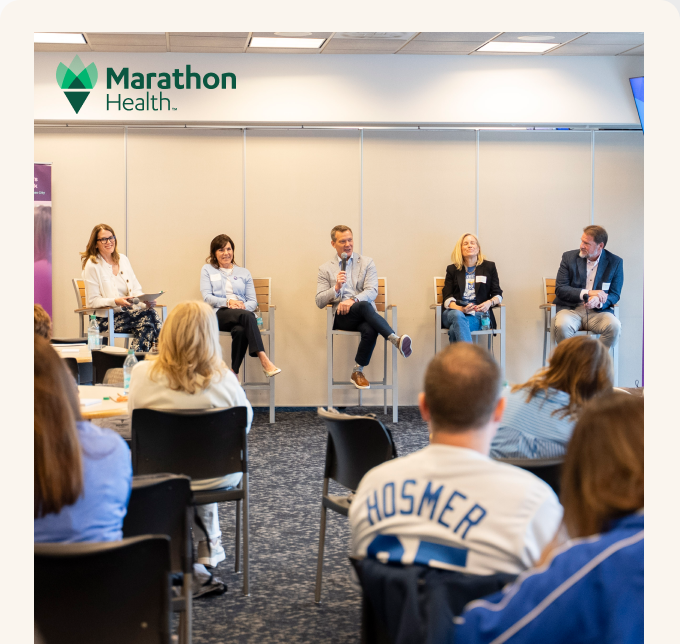
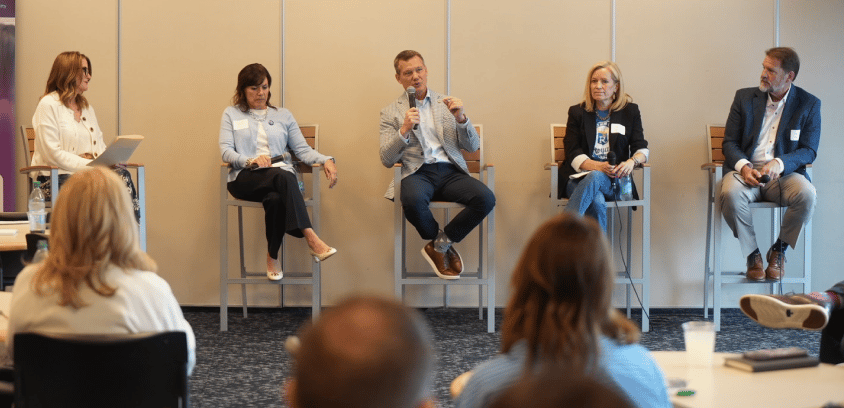
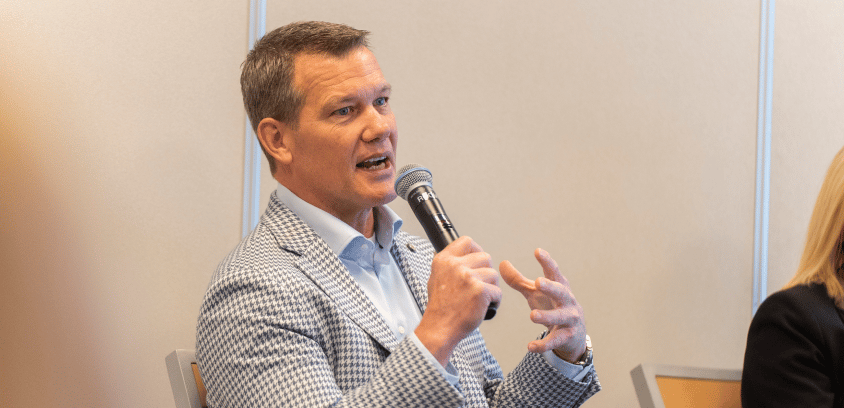
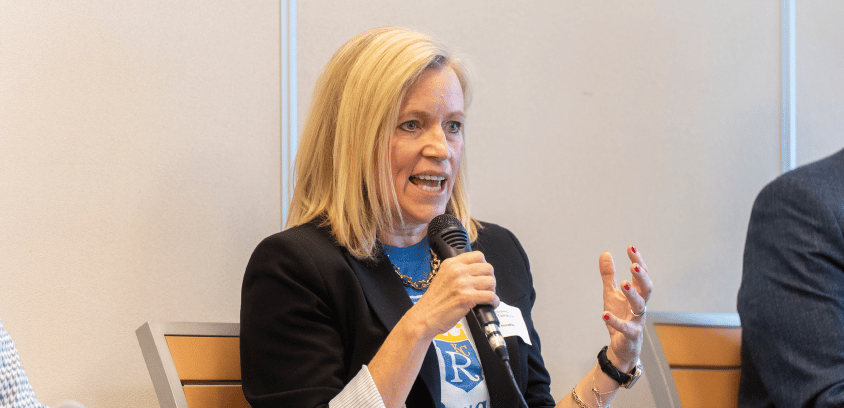
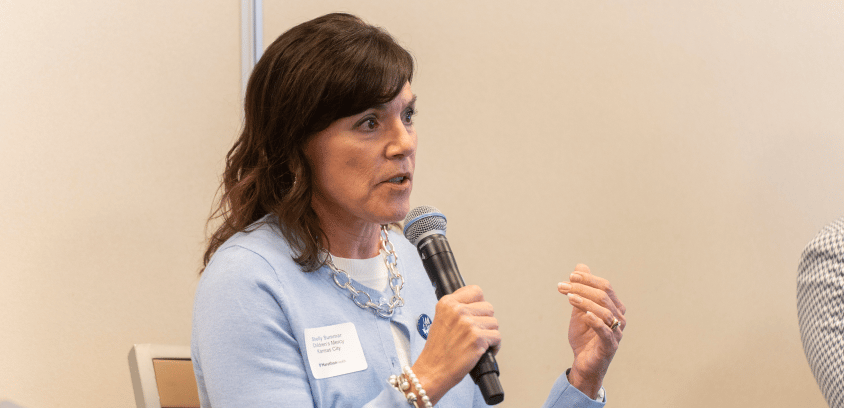
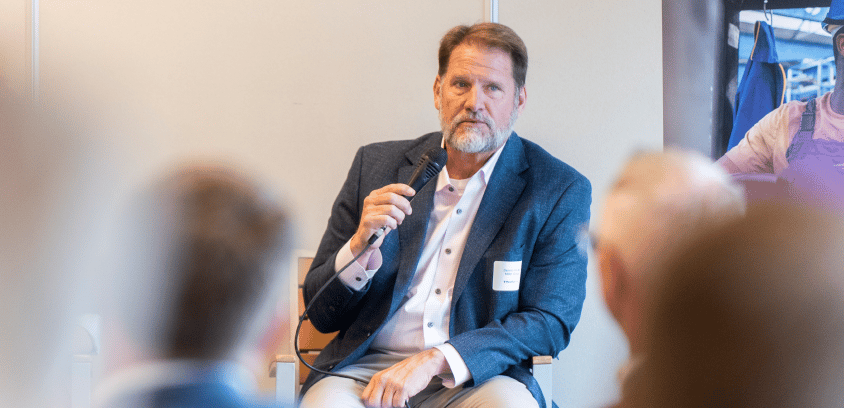
At a recent roundtable hosted by Marathon Health in partnership with the Kansas City Business Journal, healthcare, business, and benefits leaders explored how employers can help close that gap. Moderated by Stacie Prosser, the discussion featured Stephanie Price, chief people officer at Terracon; Shelly Summar, director of employee wellness at Children's Mercy; Dennis Kadel, SVP of benefits at The Miller Group; and Doug Sumner, vice president of affairs and education at Marathon Health.
One theme emerged consistently: improving healthcare outcomes requires more than offering insurance. It requires access to care that's easier to navigate, and more connected to employees' daily lives.
What healthcare challenges do Kansas City employers face today?
When the panel discussed the biggest Kansas City healthcare challenges facing employers, three interconnected issues rose to the top: affordability, accessibility, and the employee experience.
"The big things that weigh on my mind: affordability and accessibility," said Stephanie Price.
Doug Sumner connected those issues directly to the patient experience. Even when people decide to seek care—which, he noted, isn't happening nearly enough—they enter a system marked by access barriers, rising costs, and interactions that leave them feeling unsupported. As Sumner put it, "We don't have a healthcare system, we have a sick care system."
Why doesn't health insurance guarantee access to care?
Many employers assume that offering strong health insurance is enough to help employees get the care they need. Insurance is an essential part of the solution, but it does not remove the real-world barriers that keep people from seeing a provider.
"Health insurance is not synonymous with access to care," Sumner said. "Health insurance is a pathway to care."
For many employees, that pathway remains difficult to walk.
Pathways to care with a diverse workforce
The challenge grows more complex as employers support workforces with varying schedules, life stages, and barriers to care. A single company might employ someone who is 26 alongside someone who is 66, and their healthcare needs look nothing alike.
For employees in maintenance, operations, manufacturing, education, construction, and other hourly roles, a medical appointment during business hours can mean unpaid time off, leaving a jobsite, or disrupting an already packed schedule. Sumner recalled that his district's custodians could not afford a behavioral health visit in Johnson County, and grounds workers had no room in their day for an 8 am to 4 pm appointment.
The result is predictable. Many employees delay care, lean on urgent care centers and emergency departments, or skip treatment altogether. Those choices ripple outward—delayed care often leads to more serious conditions, higher costs, reduced productivity, and lower engagement for employees and employers alike.
How are employers taking a more active role in the healthcare experience?
The discussion pointed to a clear shift: Employers are increasingly judging benefits by employee outcomes, not just the level of coverage on paper.
“We can’t just settle for ‘We’re providing them with really good health insurance,’” Price said. “We have to understand what that experience is like. What is the true healthcare access they have?”
Rather than focusing only on annual claims reports and premium increases, employers are asking a more fundamental question: Can employees actually access the care they're paying for? Price stressed the importance of keeping the human side of healthcare at the center of those decisions.
It’s easy to get caught up in the numbers. The fundamental thing we have to keep orienting ourselves around is these are employees and these are people with real challenges, and we have a responsibility to help them. —Stephanie Price
That mindset is leading many organizations to rethink traditional health benefits strategies and explore new ways to improve access, engagement, and overall well-being.
Why is advanced primary care becoming a strategic workforce investment?
For many employers, advanced primary care serves as the foundation of a healthier workforce. When employees can reach timely, relationship-based care, they are more likely to catch concerns early, manage chronic conditions, and avoid costly emergency or urgent care visits. That matters in a market strained by provider shortages—the U.S. is projected to be short 100,000 healthcare workers by 2028.
Sumner shared examples from school districts where expanded access to primary care improved both employee well-being and workplace performance. In his district, 60 to 65 percent of staff members walked the halls with chronic, mismanaged, or undiagnosed health issues—from back pain and undiagnosed diabetes to mismanaged hypertension.
"When you're healthy, you're in better spirits and generally a happier person," Sumner explained.
Workforce health and business performance are connected
The panel emphasized that better access pays off well beyond healthcare costs. Organizations with healthier employees often see gains in:
-
Employee engagement
-
Productivity and performance
-
Retention and loyalty
-
Attendance and reliability
-
Overall workforce well-being
More Kansas City employers now view healthcare as a strategic investment in performance, retention, and culture rather than an obligation.
A healthy workforce is a more engaged workforce. It is a more loyal workforce. It is a less expensive workforce to employ. —Doug Sumner
Why do health literacy and navigation matter for better outcomes?
Improving access is critical, but Shelly Summar emphasized that care access alone does not guarantee better outcomes. Employees also need to understand how to navigate the system, follow treatment plans, and use the resources available to them.
"You can improve access and affordability," Summar said. "But if the person receiving the care doesn't know what to do when they walk out of the doctor's office because they didn't understand what they were told, then nothing changes."
Left without guidance, people return to the same habits that contributed to their health issues in the first place. That reality is pushing many employers toward more connected care models that help employees understand their care plans and find support beyond the exam room.
How does integrated healthcare strengthen employee engagement?
Summar shared how an integrated care model has improved both the employee experience and healthcare engagement at Children's Mercy.
The organization's employee health clinic brings primary care, behavioral health, physical therapy, and nutrition services together in one coordinated setting. By connecting services and reducing barriers between providers, employees can more easily get the care they need—and the clinic gains a clearer picture of its population's health.
The approach has delivered measurable results. Summar revealed that employee satisfaction scores rose by more than 20 points over the past 18 months, and utilization of primary care, behavioral health, and physical therapy services continues to climb.
Mental health support is central to workforce well-being
The leaders at Children's Mercy recognize that healthcare is emotionally demanding work. Employees often face long hours, physically taxing schedules, and difficult situations that wear on mental health over time. Yet access to behavioral care is strained everywhere.
To make support easier to reach, Children's Mercy introduced informal mental health chats with providers. These are non-clinical, 30-minute sessions with no cost and no commitment, giving employees a low-pressure way to learn about available resources and grow comfortable seeking care.
The program has proven highly successful. Many participants commit to ongoing care afterward, and according to Summar, the chats have prevented suicide in specific cases.
How should employers measure the value of healthcare investments?
The discussion also explored how employers should evaluate healthcare investments.
Traditionally, organizations have relied on return on investment (ROI) to judge whether a program delivers measurable financial value. ROI remains important, especially as costs keep rising.
In Missouri, employers working with Marathon Health have achieved an average first-year ROI of 1.2x, with returns growing to as much as 3.7x by year five.
Still, panelists agreed that financial performance tells only part of the story. Summar explained that Children's Mercy has widened its evaluation framework to include value on investment (VOI), which captures both financial outcomes and the broader impact on employees.
Value drivers go beyond direct cost savings
Many of the most meaningful benefits of healthcare investments resist easy measurement through financial metrics alone. These include:
-
Employee retention
-
Employee satisfaction
-
Reduced absenteeism
-
Increased productivity
-
Greater healthcare engagement
-
Stronger trust in employer-sponsored benefits
Dennis Kadel noted that it can be hard to quantify the costs avoided when a condition is caught and treated early—even though those savings are real and significant. The strength of the model shows up in other ways, too.
What the future of workforce healthcare in Kansas City looks like
As the discussion wrapped up, the group was asked what single change they would make to improve the health of Kansas City's workforce. For Doug Sumner, the answer was simple: access.
That focus reflects the market's reality. Following years of consolidation, three hospital systems control more than 60% of hospital beds in the region, leaving many employees with limited options and rising costs.
Employers, however, hold more influence over healthcare outcomes than they may realize. Through benefit design, healthcare partnerships, workplace policies, and innovative care delivery models, they help determine whether employees can get care when and where they need it.
As costs continue to rise and workforce expectations shift, organizations that strengthen access to primary care, improve navigation, and integrate physical and behavioral health services will be better positioned to support both employee well-being and long-term success.
The takeaway is straightforward: Health insurance is only the starting point. Helping employees access, navigate, and engage with care is what ultimately improves health outcomes, workforce performance, and organizational success.