Healthcare has long been viewed as an employee benefit—important but largely owned by HR and benefits teams. For Indiana employers navigating rising costs, growing rates of chronic conditions, mental health challenges, and persistent access barriers, that framing no longer holds.
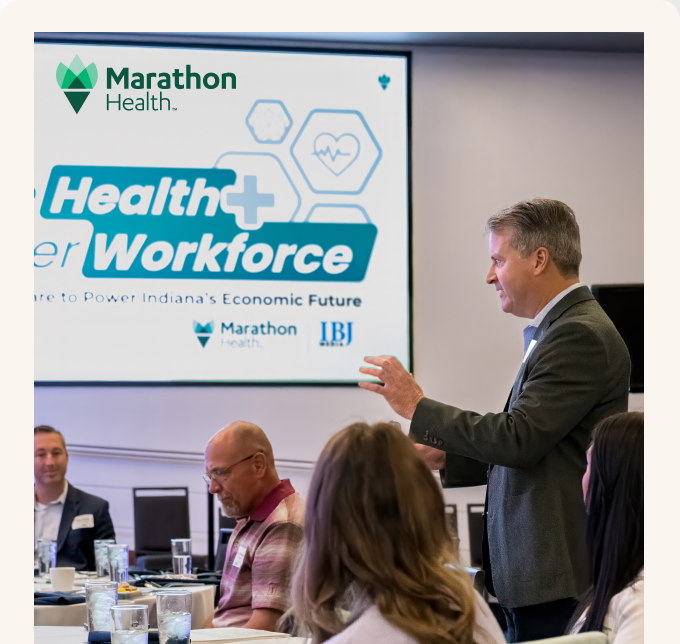
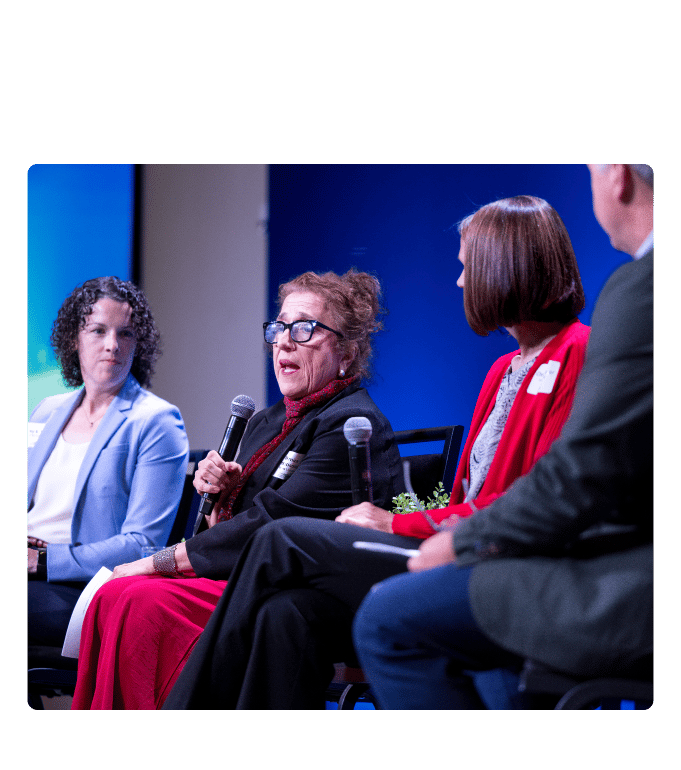
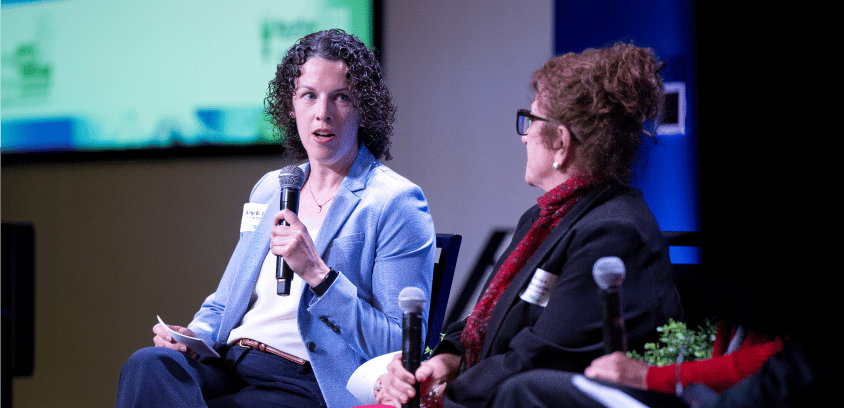
At a recent roundtable co-hosted by Marathon Health and IBJ Media at Gridiron Hall at Indiana Farm Bureau Football Center, business, healthcare, and civic leaders gathered to explore a bigger question: What changes when workforce health becomes a business strategy?
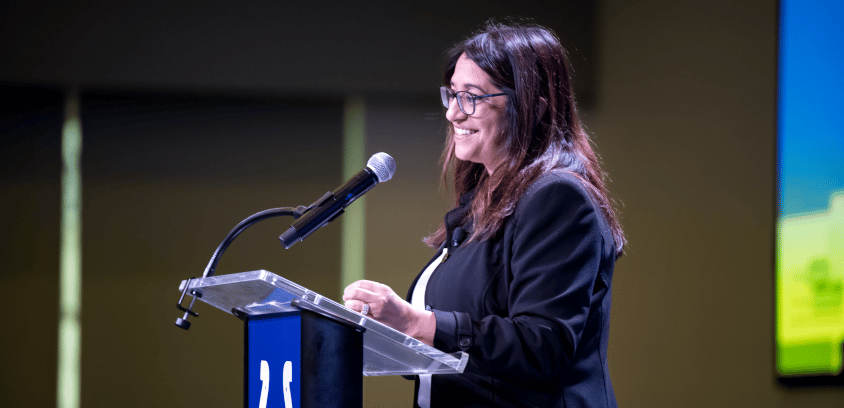
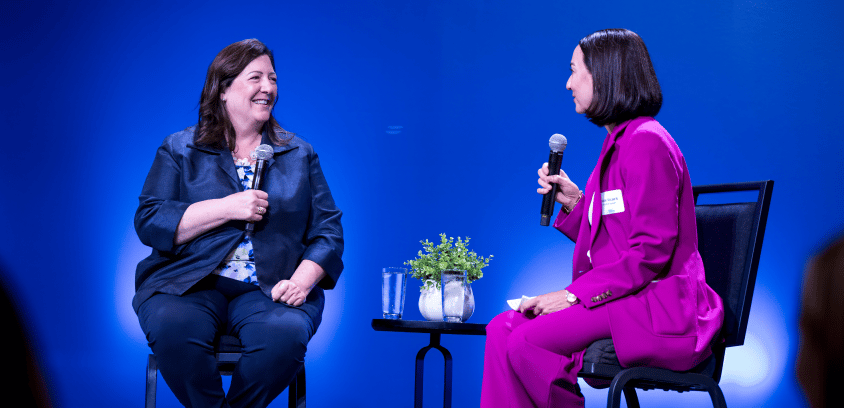
The roundtable drew perspectives from across Indiana. Speakers included Jasmine Park, vice president of people, culture, and inclusion at the Indianapolis Colts; Dr. Gloria Sachdev, Indiana secretary of health and family services; Sue Finkam, mayor of Carmel; Christan Royer, senior director of benefits at Indiana University; Amy Davis, vice president of growth and development at MJ Companies; Dr. Bernice Pescosolido, distinguished professor of sociology at Indiana University; Chris Pricco, chief executive officer of Marathon Health; and Kathy Miller, manufacturing executive and author.
One message surfaced consistently: employee health, organizational performance, and Indiana's economic future are deeply connected. And employers are better positioned than they may realize to influence all three. 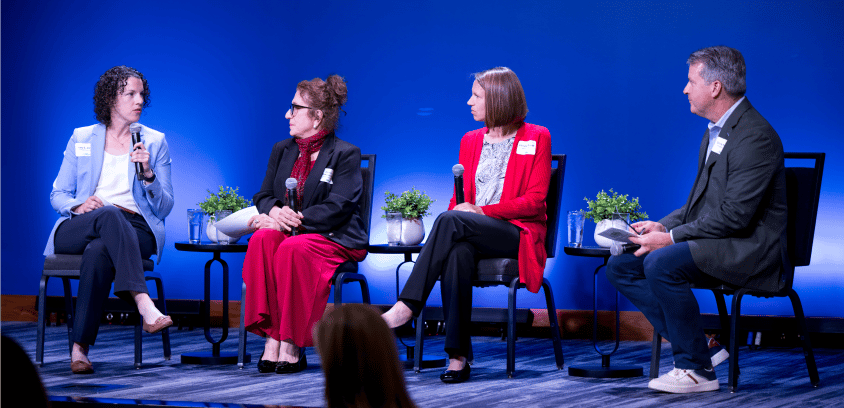
Whole health and workforce performance go hand in hand
The connection between health and performance was clear from the opening remarks.
Jasmine Park challenged employers to approach workforce health the way professional sports organizations approach athlete performance. Physical recovery does not exist in isolation from mental health, resilience, or environment—and the same principle applies to every employee.
"High performance and whole health are not separate pursuits." —Jasmine Park, vice president of people, culture and inclusion, Indianapolis Colts
Park noted that the boundary between mental and physical health is rarely as clean as benefits packages suggest. Stress manifests physically. Chronic conditions affect mental well-being. And mental health challenges shape productivity, engagement, safety, and retention.
For employers, this means the conversation about workforce health must go beyond claims data and utilization reports. It must also ask whether employees are healthy enough to perform at their best—and whether the workplace and healthcare system support or hinder that goal.

Indiana's healthcare affordability challenge requires employers to act
Cost remains impossible to ignore.
Indiana employers are operating in an environment where healthcare costs are projected to reach a 15-year high, and provider shortages continue to strain both organizations and their people. More than 14% of Indiana adults live with three or more chronic conditions, making a proactive approach to care more urgent than ever.
Dr. Gloria Sachdev argued that employers carry an especially important role because of their purchasing power. Her message wasn't simply to demand lower costs—it was to use greater transparency and better data to identify where employees can receive the best combination of quality, affordability, and access.
"If the purchasers of care do not apply pressure on the providers of care and the insurance companies, nothing will change."—Dr. Gloria Sachdev, Indiana secretary of health and family services
Sachdev connected affordability directly to employees' household finances. Medical costs don't exist in isolation—unaffordable care can affect credit, housing, and long-term financial stability for workers and their families. That reality invites employers to think differently about their role: not simply as organizations that pay healthcare bills, but as active purchasers capable of shaping how care is accessed and delivered.
Mental health access is improving, but gaps remain
One of the clearest connections between health and workforce performance is mental health—and more employees are beginning to seek help.
Amy Davis shared that across MJ Companies' book of business, mental health services utilization increased 11% from 2024 to 2025. Mental health ranked as the third most common reason employees sought care, behind screenings and exams and musculoskeletal concerns.
Increased utilization can be a positive signal—one that suggests employees are recognizing when they need support, that stigma is beginning to lift, and that people are accessing services they previously avoided. But awareness alone doesn't close the gap.
Making mental healthcare easier to reach
For employers, one of the most meaningful opportunities is simplifying the path from recognizing a need to receiving care.
Indiana University (IU) has seen this firsthand. After initially launching advanced primary care through Marathon Health, IU added mental health services in late 2024. In 2025, approximately 13% of its nearly 8,000 Marathon Health visits were for mental healthcare—and utilization continued to grow through the first half of 2026.
Royer pointed to convenience, speed, and affordability as critical factors. Employees experiencing anxiety, depression, or other mental health challenges shouldn't have to navigate a complicated system just to figure out where to start.
Davis reinforced that point, encouraging employers to look beyond benefits alone. Peer support programs, manager education, and mental health advocates help employees recognize signs of struggle and understand where to turn. Making access easy must be part of the strategy.
"Simplifying access is a really big opportunity—making it easy for employees to access mental healthcare right from the start. Otherwise, if we make it too difficult, they're just going to shut down." —Amy Davis, vice president of growth and development, MJ Companies
Whole-person health requires more than one solution
Carmel Mayor Sue Finkam offered a concrete example of what a holistic approach looks like in practice.
The City of Carmel has invested in several interconnected strategies: crisis intervention teams embedded within the police department, peer support networks, athletic trainers accessible to all city employees, and specialized mental health resources for workers in high-stress roles.
The goal isn't simply to add more programs. It's to recognize how different dimensions of health affect one another. Physical pain creates mental stress. An injury that limits someone's ability to work creates financial pressure. Financial stress further affects mental well-being.
Mayor Finkam put it plainly: see the employee as a whole person.
That philosophy can help employers audit their own benefits ecosystems. Rather than asking whether they have enough individual solutions, organizations can ask:
-
Can employees easily find help when they need it?
-
Are physical and mental health services connected?
-
Does primary care serve as a trusted starting point?
-
Are managers and peers equipped to recognize when someone needs support?
-
Can employees access care quickly and affordably?
Technology can improve access—but it can't replace human connection
Technology and AI are opening new ways to help employees navigate healthcare. Digital tools can identify resources, answer initial questions, and provide a starting point for people who don't know where to turn.
But panelists cautioned against treating technology as a complete solution.
Royer noted that across IU's mental health data, approximately 75% of people still want to see someone in person. Davis described AI as a valuable front door—a way to triage needs and connect people with the right resources—but emphasized that technology cannot replace a trusted care relationship.
"We need to know where the line is where AI starts and stops. And when it stops, that's when the human connection needs to take over." —Amy Davis, vice president of growth and development, MJ Companies
Dr. Bernice Pescosolido added an important caution from her research: AI systems are designed to please the user, which can sometimes produce responses that are actively harmful to mental health—particularly for younger users. That distinction matters as employers evaluate the growing number of digital healthcare solutions available to them. Technology can simplify access. Relationships are what make care effective.
Primary care as the front door to whole-person health
As healthcare grows more complex, employees need a trusted, consistent place to start. Advanced primary care fills that role.
Rather than expecting employees to self-diagnose, find the right specialist, or navigate disconnected vendors, advanced primary care provides a single-entry point for preventive care, chronic condition management, mental health support, and care navigation. Marathon Health's Indiana data shows that engaged members experience fewer inpatient admissions, greater primary care utilization, and up to $3,100 in savings per engaged member.
The value, however, isn't only financial.
A trusted primary care relationship helps employees address concerns earlier, understand their options, and connect to the right services—without navigating the system alone. As AI makes it easier for employees to search for symptoms and self-refer to specialists, primary care becomes an important counterweight, steering people toward appropriate care rather than the highest-cost entry point.
The City of Carmel offered a compelling example. A CDL driver, through regular engagement with his care team, was identified as having significant cardiac blockages. He underwent open-heart surgery and recovered fully. Without that ongoing relationship, the condition could have gone undetected. That's the difference a trusted primary care team can make.

A healthier workforce is a stronger workforce
Kathy Miller closed the event by connecting everything back to business performance. Healthcare, she argued, has moved beyond being a benefits strategy alone.
"Employers are not just purchasing healthcare—they're creating conditions for all of their team members to work and live and lead and contribute at their very best." —Kathy Miller, founder and CEO, More4Leaders LLC.
When employees come to work exhausted, overwhelmed, or unable to access care, the impact shows up in operating results—from safety and productivity to absenteeism and turnover. Miller drew on decades leading large global manufacturing operations to make the case that human systems and operating systems are not separate. They are the same thing.
That's why whole health shouldn't sit on the sidelines of business strategy. For Indiana employers, building a healthier organization means connecting the pieces: affordable care, accessible advanced primary care, mental health support, trusted relationships, informed leaders, and a workplace culture that makes it easier for people to ask for help.
The challenge is real—but employers don't have to solve every piece at once. Miller challenged attendees to leave with one concrete commitment to act on within 30 days.
Pull the mental health utilization data. Train a manager. Examine where employees struggle to access care. Ask whether existing benefits are truly connected. Or simply have a more meaningful conversation with someone on your team.
Building a healthier workforce doesn't begin with adding another benefit. It begins with treating health as fundamental to how people—and businesses—perform.