Philadelphia is home to America's first hospital, its first medical school, and some of the most respected health systems in the world. For more than 275 years, the region has been a center of medical innovation. Yet despite that legacy, many Pennsylvania employees still struggle to access the care they need when they need it.
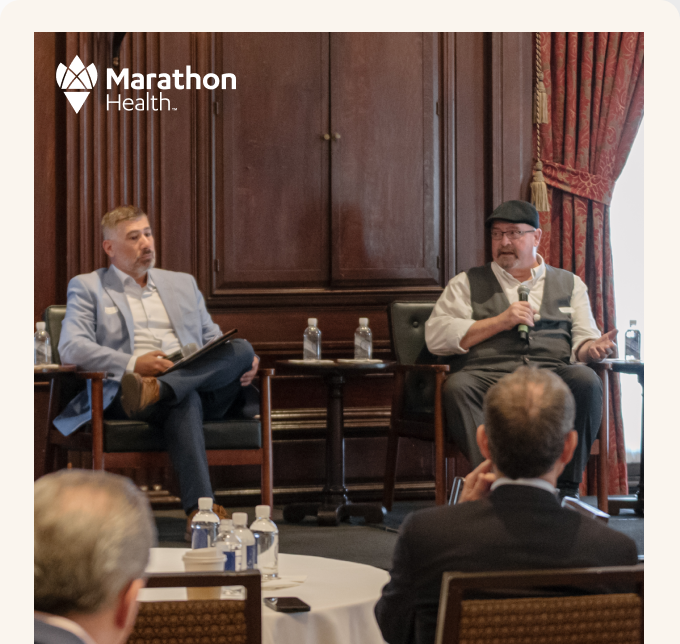
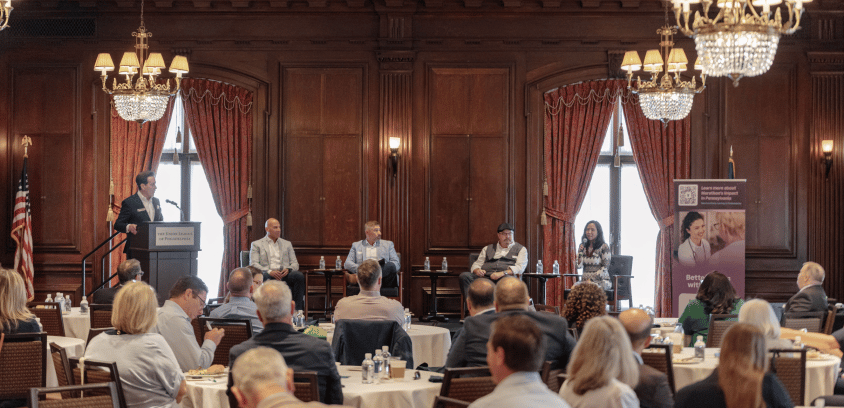
That paradox was at the heart of a recent roundtable hosted by Marathon Health, in partnership with the Philadelphia Business Journal, held at the Union League in Philadelphia. Employers, healthcare leaders, and benefits experts gathered to explore a question that isn't simply about resources: Why do employees in one of the most medically rich cities in the country still fall through the cracks?
Moderated by Philadelphia Business Journal Publisher Sandy Smith, the event opened with remarks from Tom Belmont, president of the Greater Philadelphia Business Coalition on Health (GPBCH), who framed the challenge directly. Employers cover more than 52% of Americans through employer-sponsored plans, yet their voice remains largely absent from conversations about how care is designed and delivered.
"We continue to be confronted with higher costs and fragmented care models that aren't conducive to early intervention, accessibility to primary care, and treatment of chronic conditions," Belmont said. "We need to think differently."
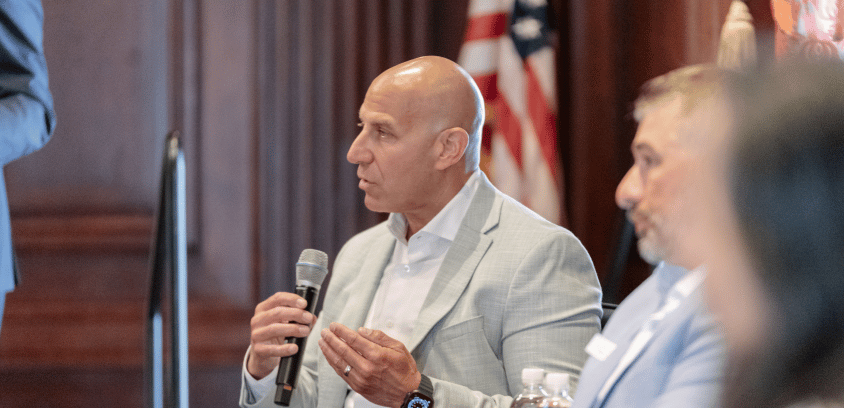
A panel featuring James Startare, vice president of benefits at Aramark; George Fiore, executive director of Chester County Intermediate Unit; Robert Bair, president of Pennsylvania State Building Trades; and Sunny Cutler, senior consultant at Lincoln Financial, followed with a grounded discussion on what employers are actually doing to change things.
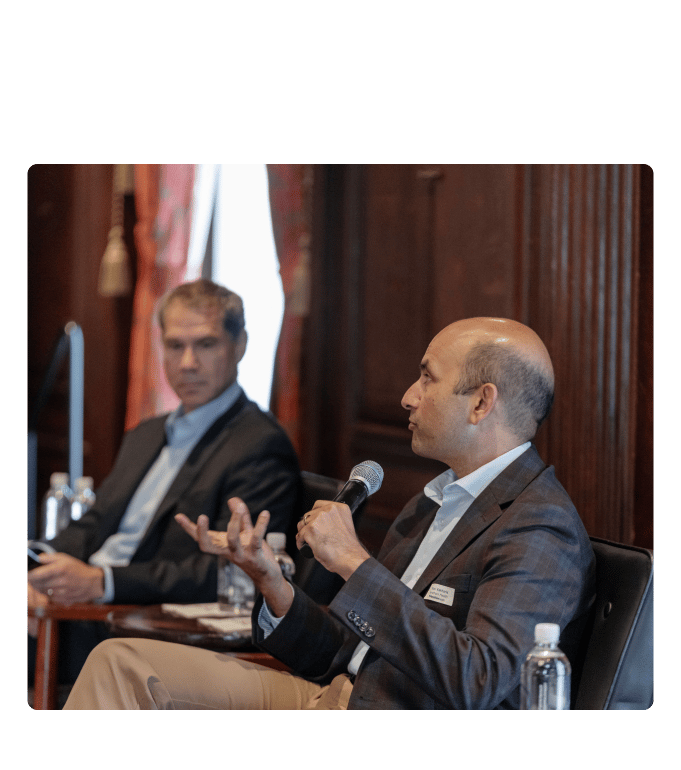
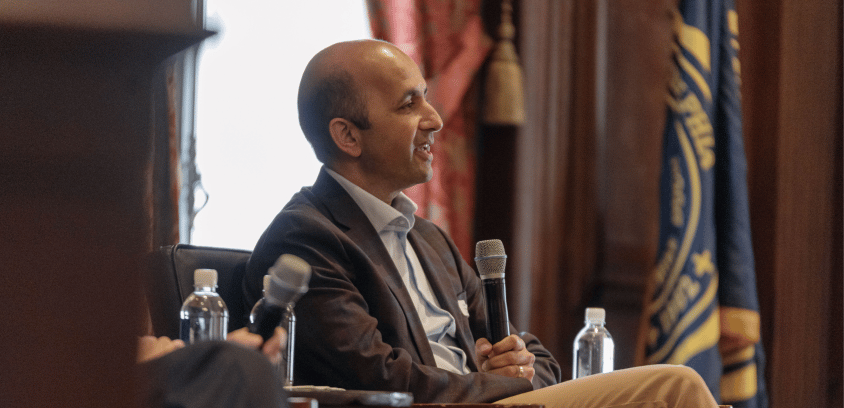
The event concluded with a fireside chat between Marathon Health COO Dr. Nirav Vakharia and Dr. Justin Bekelman, co-founder and CEO of Daymark Health, on what connected, coordinated care looks like in practice.
One theme emerged across every conversation: improving workforce health requires more than expanding benefits. It requires stronger connections—between employees and primary care, between primary care and specialty care, and between employers and the healthcare system at large.
Philadelphia has world-class healthcare, but many employees still struggle to navigate it
The Philadelphia region has no shortage of healthcare resources. Nationally recognized hospitals, world-class specialists, and a robust academic medical ecosystem are all within reach. But proximity to great healthcare is not the same as access to it.
Panelists representing employers, education, labor, and the benefits industry described a consistent set of barriers: limited primary care availability, rising out-of-pocket costs, complex benefits that employees don't fully understand, and a fragmented system that makes it difficult to know where to turn when something goes wrong.
Bair, who chairs the Pennsylvania Healthcare Cost Containment Council (PHC4) and oversees coverage for 130,000 building trades members statewide, put the cost problem in stark terms. The same knee surgery can cost $22,000 in Philadelphia and $14,000 in Hershey. That kind of disparity, he argued, is something most employees—and even many employers—don't see and can't act on without better data.
Fiore echoed the concern, noting that even Chester County, one of the wealthiest counties in the nation, saw two hospitals close in critical locations. For support staff and hourly workers, the loss of nearby facilities doesn't just mean a longer drive. It means delayed care, missed preventive visits, and conditions that go unmanaged until they become emergencies.
"We had two hospitals close, and they were in critical locations. We're seeing this large growing need in a wealthy area that has inequitable access, and that seems unacceptable." —George Fiore, executive director, Chester County Intermediate Unit
Employers need a seat at the table
Startare made a point that resonated throughout the room: employers often don't understand the cost dynamics of hospital systems—not because they lack the ability to, but because they haven't had a seat at the table.
"It's the carriers or TPAs and the hospitals," he said. "Employers need to not only create change and foster disruption but find a way to be at that table—particularly the larger the employer, or the combination of employers together—to have enough clout to have a meaningful cost discussion."
That shift—from passive payer to active purchaser—was the organizing theme of the morning.
Pennsylvania employers want to be active architects of healthcare
A growing number of organizations across Pennsylvania are no longer waiting for the system to change. They're changing it themselves—through direct contracting, self-funded plans, nearsite and onsite care models, and closer partnerships with providers.
Strategies for improving outcomes while managing costs
Panelists shared a range of approaches their organizations have adopted to support employee health while controlling spending:
-
Advanced primary care model, including onsite and nearsite clinics
-
Direct contracting with health systems
-
Self-funded and consortium health plans
-
Improved care navigation and benefits literacy
-
Technology-enabled access, including virtual primary care and urgent care alternatives
For Bair, the results speak for themselves. By taking full ownership of healthcare purchasing—going self-insured on medical, dental, prescription, and eye care; negotiating directly with carriers; and structuring plan design around prevention and early intervention—his fund has gone 11 years without increasing healthcare costs for members. That's comprehensive coverage at $1,300 per month with no deductibles and no out-of-pocket costs.
"Claims avoidance is where the big savings come in," Bair said. "If I don't do this, I'm not going to put any money in my guys' pockets when I negotiate a wage increase. It's all going to be going to healthcare."
Startare described a similarly proactive approach at Aramark, where six direct hospital contracts across the country are already producing results. Rather than presenting health systems with a predetermined rate sheet, his team opens with a different question: "Are you willing to do something different?" Nine times out of 10, the answer is yes.
"After doing it for four years, it's working," he said. "Cost is going down, quality is improving."
Cutler offered a steadying perspective on what it takes to sustain that kind of progress. It requires patience, resilience, and belief—especially when results aren't immediate. "For those fighting the good fight," she said, "keep at it."

Primary care is the foundation of connected care
As the discussion shifted toward solutions, one strategy came up repeatedly: strengthening access to primary care.
Amid all the conversation about point solutions, digital health platforms, and specialty services, panelists agreed that primary care remains the essential starting point. It's where prevention happens, where chronic conditions get caught early, and where patients find a trusted advocate to help them navigate more complex care.
Vakharia described the consequence of losing that foundation over time. Without a consistent, trusted primary care relationship, patients don't know where to turn when something feels wrong. So, they don't call the office. They don't book an appointment. They wait—and then they drive past the clinic and go straight to the emergency room.
"When you lose trust that the lights are on, the doors are open, and the phone call will be answered at a moment when you need it," Vakharia said, "people naturally go to the parts of the healthcare system they do trust. And there are only two parts people trust implicitly: 911 and the emergency room."
That dynamic is expensive for employers, harmful for employees, and entirely preventable with the right care infrastructure in place.
Primary care reduces costs in Pennsylvania
The data backs this up. Marathon Health data shows that Pennsylvania employers have saved an estimated $238,000 through improved chronic disease management and preventive care. Panelists who have invested in primary care access—whether through onsite clinics, nearsite partnerships, or advanced primary care models—described measurable reductions in unnecessary healthcare spending.
But the value isn't only financial. Effective primary care creates a trusted entry point into the healthcare system. It enables employees to receive preventive care, address chronic conditions before they escalate, and move more seamlessly to specialty care when needed. That continuity matters.
Better outcomes require better coordination
Over the past decade, employers have made significant investments in digital health tools, behavioral health services, disease management programs, and navigation platforms. The intentions have been good. The results have been uneven.
Several panelists described what Belmont called "point solution fatigue"—a growing sense among employers that they're accumulating a longer list of disconnected resources while struggling to show that any of them are actually being used.
Vakharia offered a useful frame for understanding why this happens. Individual point solutions may be effective in isolation, but without coordination, their impact is limited. He compared the problem to a clinical trial showing that patients recovering from a heart attack had 30% lower rates of recurrence when they took a single combination pill rather than four separate medications. The medications were identical. What changed was simplicity.
"You have 30 pill bottles on the counter," he said. "The challenge is how do you integrate them all?"
The answer panelists converged on: primary care as the central hub. Rather than continuing to add standalone programs, employers should invest in a care model that brings primary care, behavioral health, specialty referrals, and ongoing support into a connected experience. The goal isn't more healthcare resources. It's making existing resources easier to access, easier to understand, and more effective for the employees who need them.
"In a well-functioning system, you have an integration layer. That base layer should be primary care." —Dr. Nirav Vakharia, chief operating officer, Marathon Health
Connected care matters most during life's biggest health events
Coordination becomes most critical—and most visible—when an employee faces a serious diagnosis. That's when delays, confusion, and fragmented care cause the greatest harm.
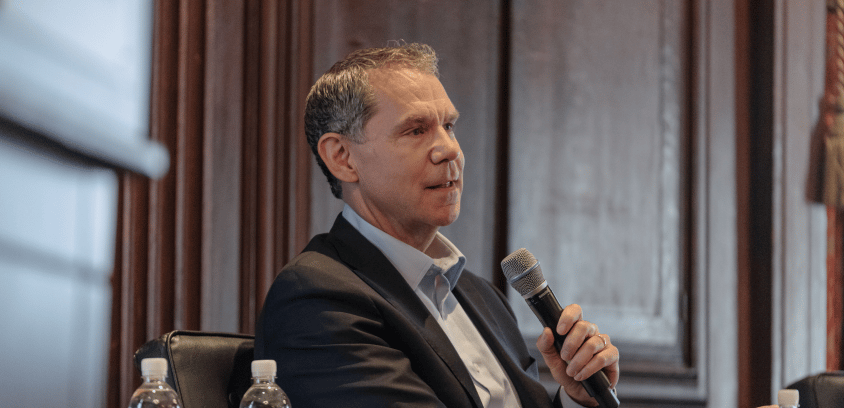
Bekelman shared the story of a patient—a public school teacher in her early 60s who had spent 30 years in her community—whose suspected pneumonia turned out to be metastatic lung cancer. In a typical healthcare experience, navigating from a chest X-ray to a confirmed diagnosis and treatment plan can take three to six months. The barriers aren't malicious. They're structural: unclear referral pathways, appointment backlogs, and no single person helping coordinate next steps.
Her experience was different. Her primary care provider contacted Daymark Health on a Wednesday. By Thursday, a Daymark clinician had reached out to the patient. By Friday, they were in her home. Over the weekend, imaging was organized. By Monday, she had a biopsy-confirmed diagnosis. On Tuesday, she was sitting with an oncologist, ready to begin treatment.
Five business days from suspected diagnosis to the start of care.
"It's bad enough to get cancer," Bekelman said. "It's even worse to face a broken, fragmented healthcare delivery system. Just because cancer is awful doesn't mean that a patient's experience of cancer treatment has to also be awful."
The story illustrated something the panel had been building toward all morning: care coordination isn't a nice-to-have. For employees navigating complex, life-changing diagnoses, it can determine whether they get timely treatment—or fall through the cracks.
Bekelman also shared a figure worth noting. Cancer accounts for approximately 15% of total employer healthcare costs, driven by roughly half a percent of a covered population. For an employer with 1,000 members, that's about five people. For Aramark, it's closer to 500. "The question I would put to you," he said, "is how do we work together to help what is a very manageable employee population access the right care at the right time?"
The future of workforce healthcare is built on stronger connections
Philadelphia doesn't have a care shortage. It has a connection problem—a gap between what's possible and what employees and plan members experience.
Closing that gap won't happen by accident. It requires employers willing to move from passive payers to active architects of healthcare: investing in strong primary care, improving care coordination, and partnering with organizations that help employees navigate the system with confidence.
As Bair put it: "You can't build a pyramid upside down. You gotta have that solid base."
The employers and leaders in that room are building it. Marathon Health data showing 582k+ in net claims savings by year two, 11 years without a cost increase for one organization's members, and measurable reductions in unnecessary healthcare spending—these aren't aspirational outcomes. They're the results of employers who decided to stop absorbing cost increases and start reshaping how care reaches their people.